

by Rick Boretsky, Managing Director Retail Implementation Services
I've spent more than 30 years working in retail integration. In that time, I've seen just about every way possible to move data between systems - flat files, spreadsheets, t-logs, custom scripts, overnight batch jobs, and plenty of "temporary" integrations that somehow stayed in production for a decade. The technology around retail has changed dramatically - but in a lot of organizations, the integrations underneath it really have not.
And that creates problems every single day.
A feed fails overnight. Inventory is out of sync between channels. Orders get stuck. Customer data doesn't update properly. Someone ends up digging through logs at 6am trying to figure out why one bad record brought down an entire process.
Most retailers know this pain because they live it constantly. The issue usually isn't the systems themselves, and retailers have invested heavily in modern POS platforms, e-commerce, OMS, WMS, and ERP solutions. The problem is the way those systems communicate with each other.
A lot of integration environments are still heavily batch-driven and file-based. That worked when overnight processing windows were acceptable. It doesn't work nearly as well in a real-time omnichannel environment where inventory, orders, pricing, and customer activity are constantly changing.
And the same operational issues keep showing up:
- Inventory mismatches between channels
- Delayed order updates
- Failed batches that require full restarts
- Hours spent troubleshooting bad records
- Loyalty and customer data syncing late
- Oversells, cancellations, and poor customer experiences
At some point, our team stopped asking how to make batch processing more reliable and started asking a different question:
What would a modern retail integration platform actually look like if we designed it around today's retail reality instead of yesterday's architecture?
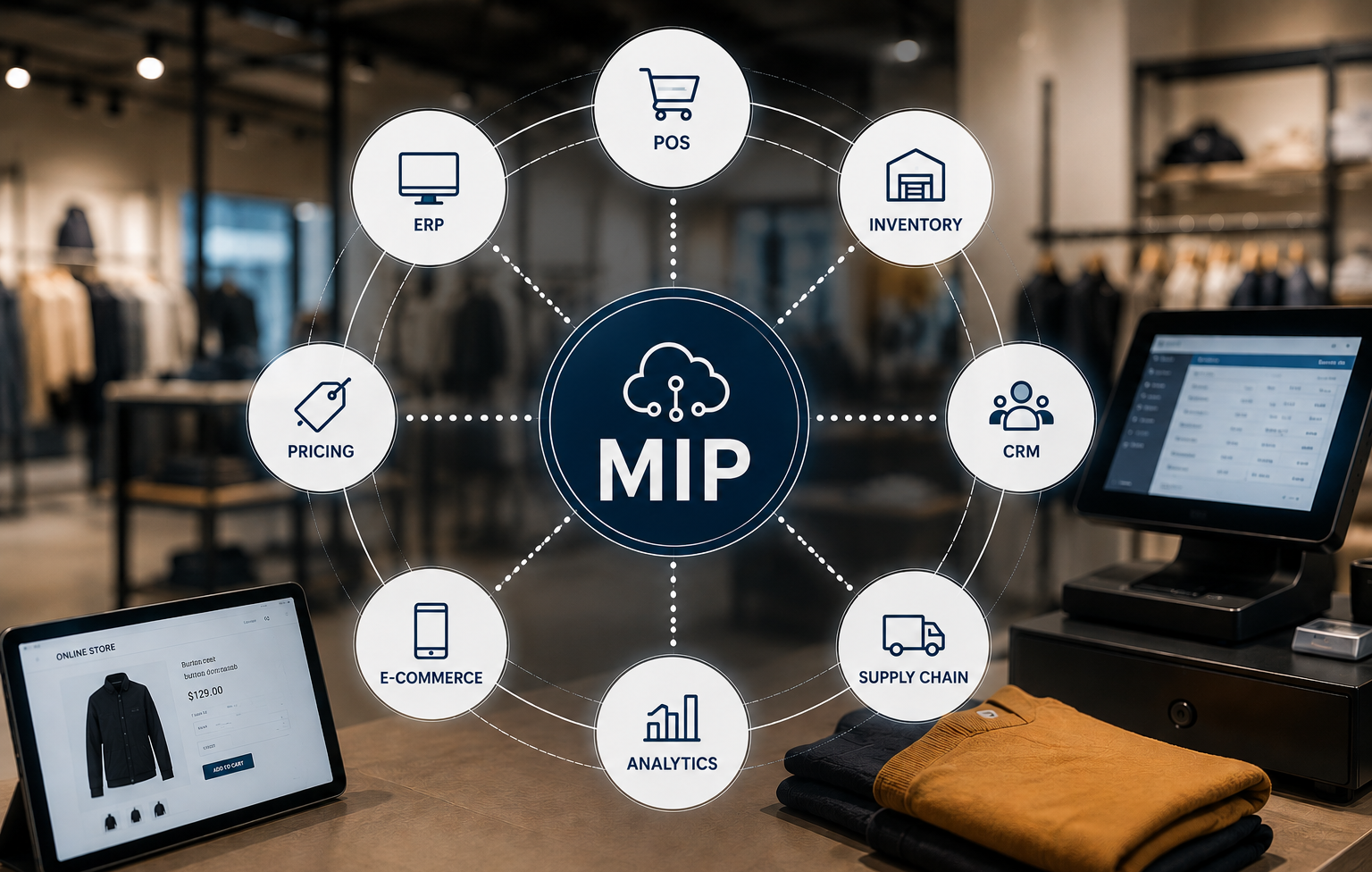
Introducing MIP
MIP was built to support real-time, event-driven retail integration from the start. Instead of relying on batch jobs, MIP processes transactions as individual events. Inventory updates, orders, customer changes, pricing updates - each event moves independently through the platform.
That means that one failed transaction doesn't stop everything behind it. It also means retailers can react to operational issues in real time instead of discovering them the next morning.
A few principles shaped how we built the platform:
Cloud-native and cloud-agnostic
Designed to scale without being tied to a specific infrastructure model.
Event-driven
Transactions move as events in real time instead of waiting for scheduled batch windows.
Real-time by default
Channels stay aligned continuously, not hours later.
Microservice-based
Each part of the process operates independently, making failures easier to isolate and recover from.
We've now started running pilots with retailers who were dealing with many of the above challenges, and the early results have been very encouraging.
Over the next few posts, I'll go deeper into:
- the architecture behind MIP
- what we learned during pilots
- where we see retail integration heading next
- any why we believe integration has become a strategic capability, not just a technical necessity
If these challenges sound familiar, I'd love to hear what your organization is seeing as well.
