

by Rick Boretsky, Managing Director, Retail Implementation Services
In my last post, I walked through the architecture behind MIP and the decisions we made to address some of retail integration’s most persistent problems: processing each transaction independently, responding to exceptions automatically, and making failures visible instead of burying them in log files.
Design principles are one thing. What really matters is what happens when the platform is running in a live retail environment, with real volumes and real exceptions.
Over the past several months, we’ve had the opportunity to see that firsthand through one of our early production deployments. A specialty footwear retailer is now running MIP for two of its core business flows: purchase order receipts in the warehouse and inventory adjustments.
MIP in production so far
~30,000 receipt documents
8.9 million units received
~1 million inventory adjustment documents
8.5 million+ units adjusted
534 PO exceptions handled automatically
650+ alerts generated across the two live flows
Receipts have been flowing through MIP since early 2026, with inventory adjustments following soon after.
The production volumes are significant, but volume on its own isn’t the story. What matters is what happened to the exceptions.
The exceptions that used to need a person
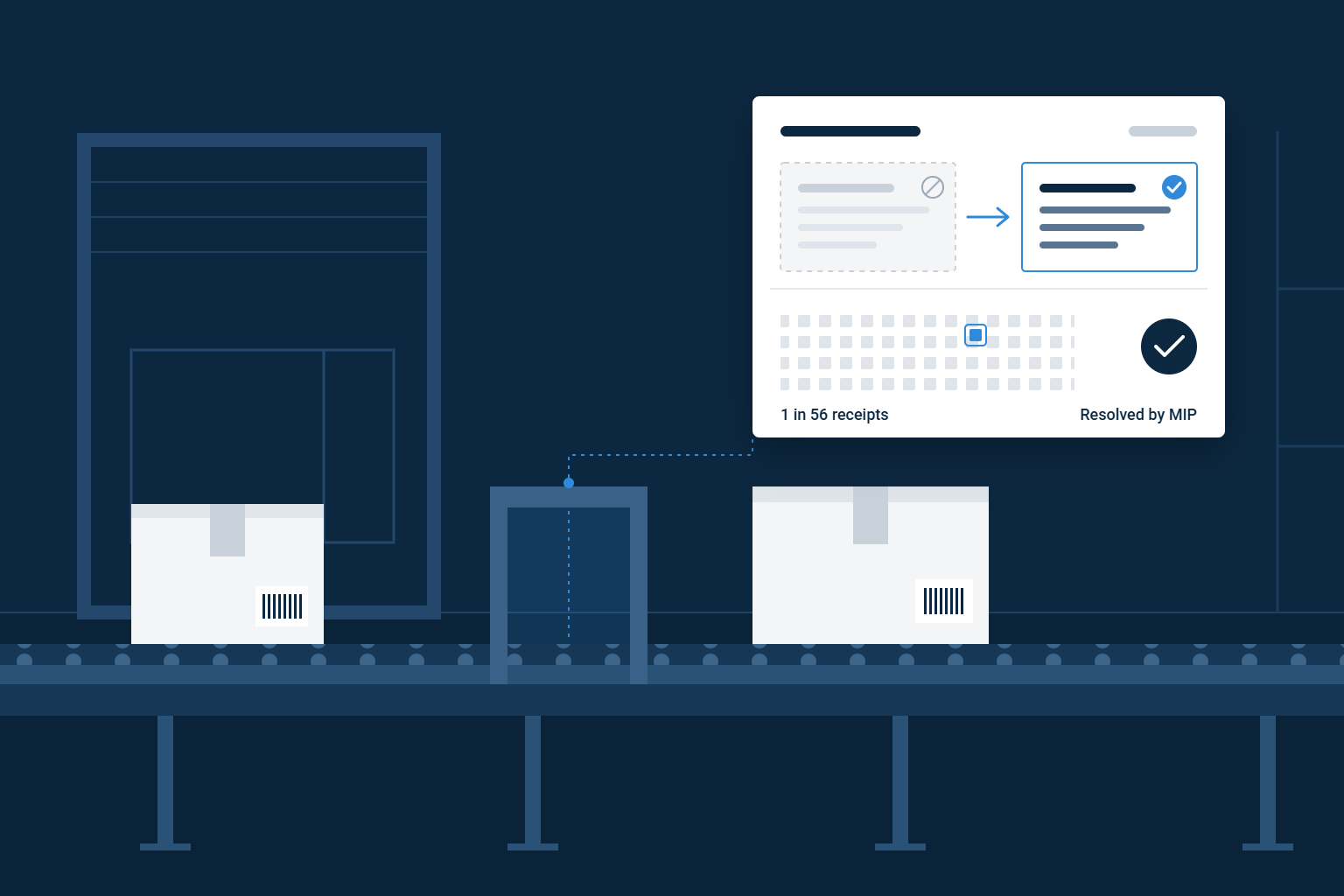
Before MIP, one of the most common receipt problems occurred when a receipt arrived against a purchase order that had already been closed or cancelled.
The legacy integration simply rejected it. Someone had to manually reopen the PO, retrieve the original file from an error folder, reprocess it, and then close the PO again.
MIP handles that scenario automatically. It checks the PO status, reopens it if needed, processes the receipt, and then returns the PO to its original status. No one has to touch it.
That has happened 534 times so far, or roughly once in every 56 receipts.
When a colleague first saw that number, his reaction was the same as mine: that has to be saving a significant amount of manual effort. Even at a conservative 15 minutes per occurrence, and anyone who has chased one of these knows it can take longer, that represents more than 125 hours of manual IT effort avoided.
What surprised us
A couple of things stood out.
The first was how frequent “rare” exceptions really are.
Nobody on the retailer’s team would have told you thatroughly one in 56 receipts had a PO problem. When exceptions are handledmanually and spread across different days and different people, they feeloccasional.
When a platform counts every one, you begin to see the truescale of the problem.
The second was how much damage a low-volume issue can do.
Receipts against inactive styles or packs only occurred acouple of times a month. Under the old process, those receipts appeared toprocess successfully and were then silently rejected downstream by themerchandising system, with no notification.
They were often discovered much later, after the inventoryhad already become inaccurate.
MIP now validates the style or pack status upfront,reactivates it when appropriate, and then processes the transaction.
Small numbers, big impact.
Alerts that go to the right people
MIP has generated more than 650 email alerts across the two live flows since go-live.
That matters for two reasons.
First, the team no longer has to monitor the flows manually every day just to find out whether something went wrong.
Second, the alerts reach the people who can actually act on them. When a receipt or transfer includes items that do not exist on the originating document, MIP sends a warning directly to the buyers. IT no longer has to find the issue in a log and relay it case by case.
Making troubleshooting faster
Probably the most immediate difference for the team has beenthe MIP dashboard.
Previously, investigating a failed transaction meant runninglengthy SQL queries and then fixing the problem through manual API calls. OurQA team estimates that investigating failures through the dashboard now takesabout one-third of the time.
Processed records and failures are visible through thedashboard, making it much easier to locate and investigate a specifictransaction.
Just as importantly, the work is no longer limited to peoplewho know how to write SQL queries or make manual API calls. People acrossdifferent levels of technical skill can investigate issues themselves, ratherthan relying on one or two specialists.
What it means operationally
Put together, the result is less about any single feature and more about a shift in how the team spends its time.
Fewer manual interventions. Fewer surprises the next morning. Problems surfaced as they happen, routed to the right people, and resolved faster.
That’s what we set out to build: integration that supports the operation, rather than an operation that has to work around its integration.
And as transaction volumes grow, the integration layer can scale with them without adding the same level of operational overhead.
In the next post, I’ll look at where we see retail integration heading next, and why we believe integration has become a strategic capability, not just a technical necessity.
If you’re seeing similar patterns in your own environment, I’d love to hear about them.
